Loading
Loading
Steel
North Cast supplies engineered steel castings for demanding U.S. industries: carbon, low-alloy, stainless, refractory, and custom steel alloys. Every product is supplied as-cast or fully machined through ISO 9001:2015-certified manufacturing processes, including pressure-rated components such as valve bodies.
Typical parts include valve bodies, pump housings, impellers, gears, brackets, and wear-resistant components.
Casting Weight Range
33 – 660 lbs
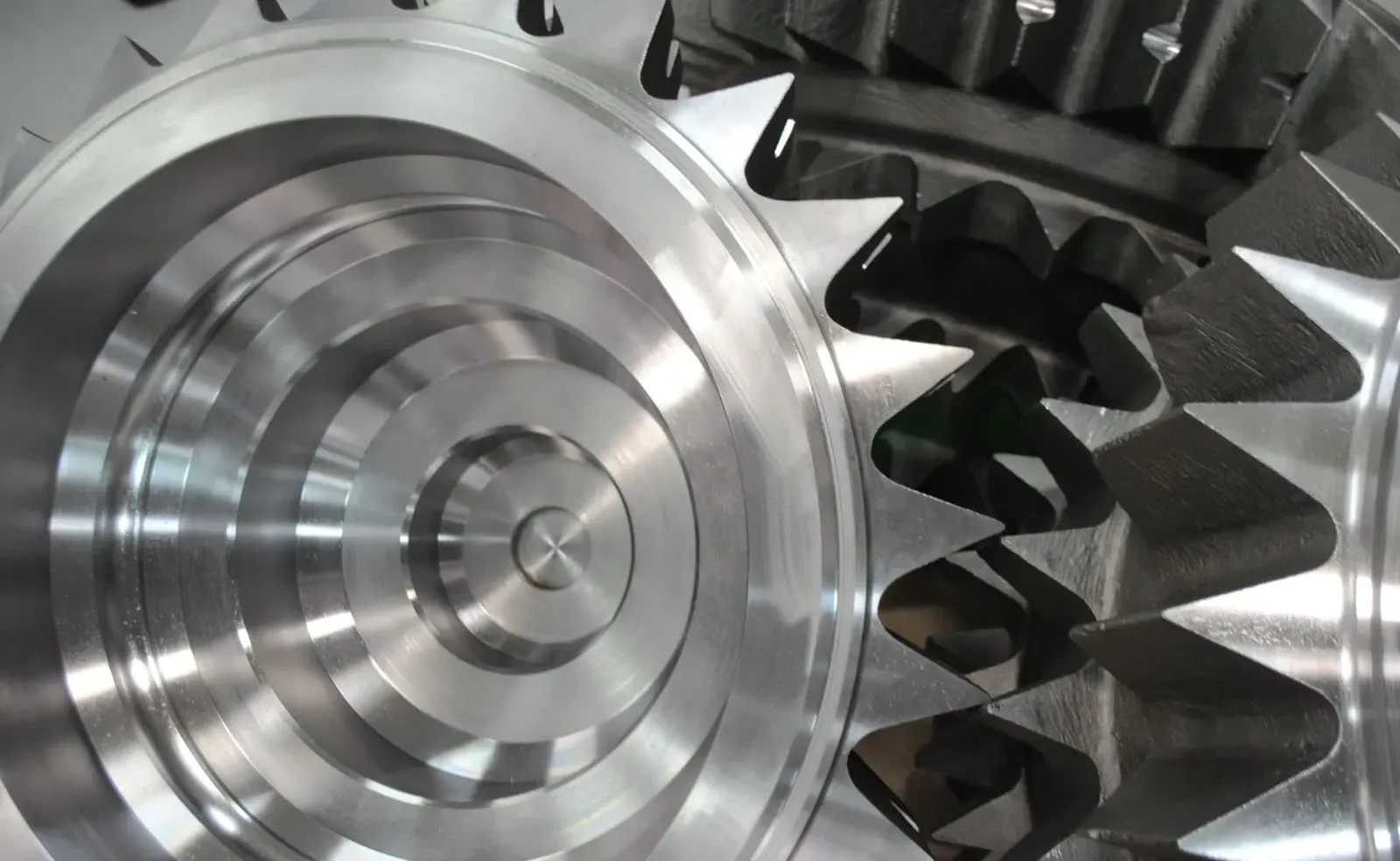
Supplied as-cast or fully CNC-machined
Materials
These are the steel alloys North Cast supplies. Every grade below is quoted to the standard shown and delivered as-cast or fully machined to your drawing. If your specification calls for a grade that is not listed, send it to us. Most can be sourced.
Carbon Steels
Valve bodies, pump casings, gas meters, structural brackets and pressure-containing parts.
Low Alloy Steels
High-temperature valves and pumps, refinery and petrochemical components, mining and oil & gas shafts.
Martensitic Stainless Steels
Hydraulic turbines, high-pressure valves, pump impellers and wear-resistant components.
Austenitic Stainless Steels
Cast equivalents of 304, 304L, 316, and 316L, for chemical, food, and pharmaceutical service.
Refractory Steels
Heat-resistant grades for cement kilns, hydrogen reformers and furnace internals.
Custom Steel Alloys
Proprietary and customer-specified compositions for unique performance requirements. Each request is reviewed and validated by our engineering team before quoting.
Typical Industries
Supplier Process
The castings we supply are produced by third-party manufacturers. The sequence below is the standard route for sand-cast steel components of this type; tooling, equipment, and specific methods differ from one manufacturer to the next. North Cast is a supply company: we review the drawing, place each part with a manufacturer qualified under ISO 9001:2015, and manage quality oversight and follow-through from RFQ to shipment.
The client provides the product design; engineering review determines how it will be cast. At our manufacturing partners, CAD/CAM engineering drives pattern development and mold design, with wood, resin, or metal patterns built to spec. Casting simulation optimizes geometry, predicts shrinkage, and eliminates defects before production.
Partner facilities produce complex cores using no-bake, cold box, hot box, and shell processes. Ceramic and silica sand cores ensure accurate internal channels and cavities, even for highly intricate geometries.
Molding method is matched to the part, not forced onto one line. Across our manufacturing partners the available processes include no-bake sand, green sand, permanent mold, and lost foam. Partner facilities run controlled, instrumented sand preparation so mold quality holds consistent from lot to lot, and each method is selected to optimize part quality, dimensional accuracy, and output for the specific alloy and geometry.
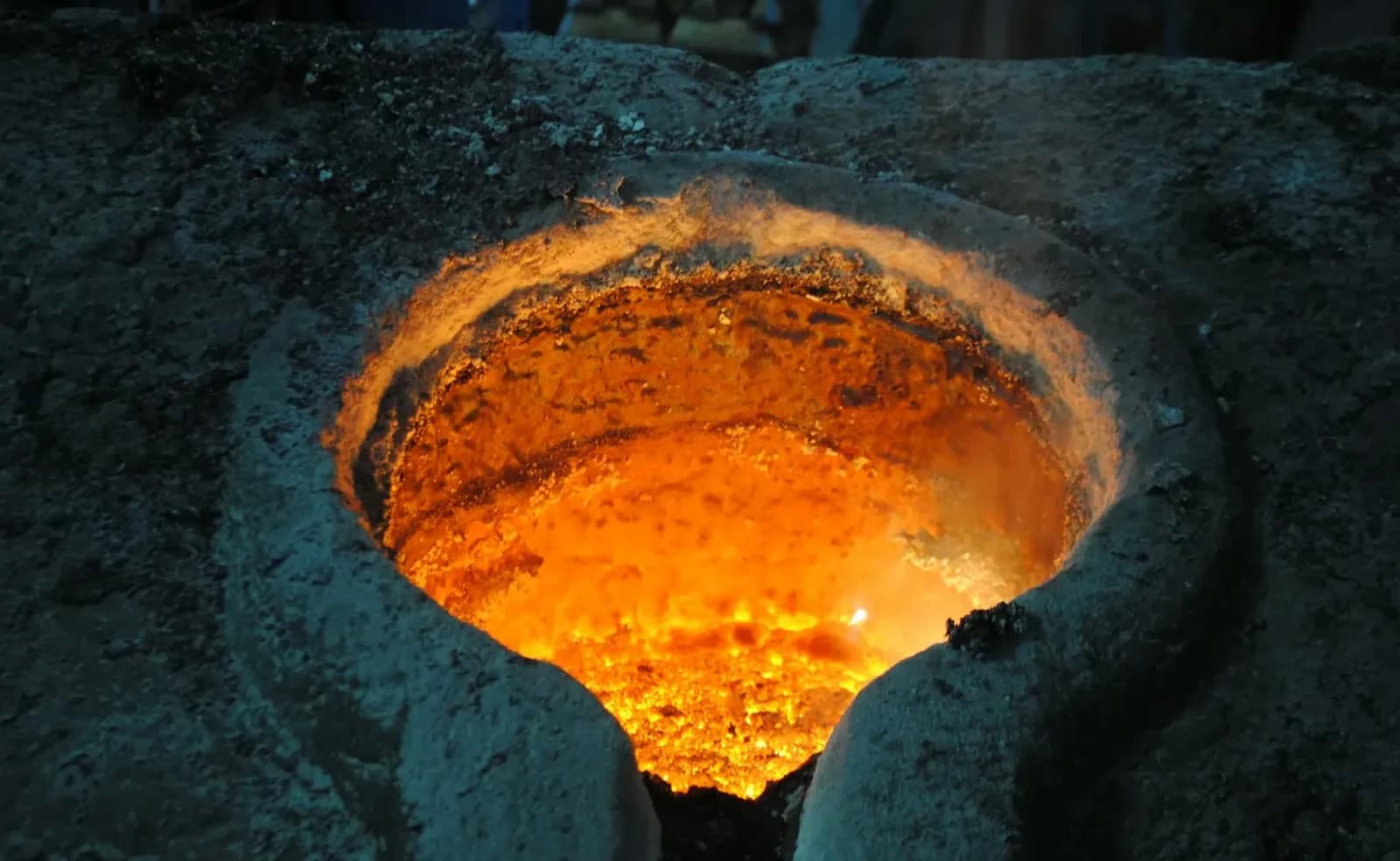
Partner facilities melt steel, brass, and copper alloys in induction furnaces. Chemical analysis per heat ensures precise alloy composition. Controlled pouring temperature and speed deliver optimal casting integrity.
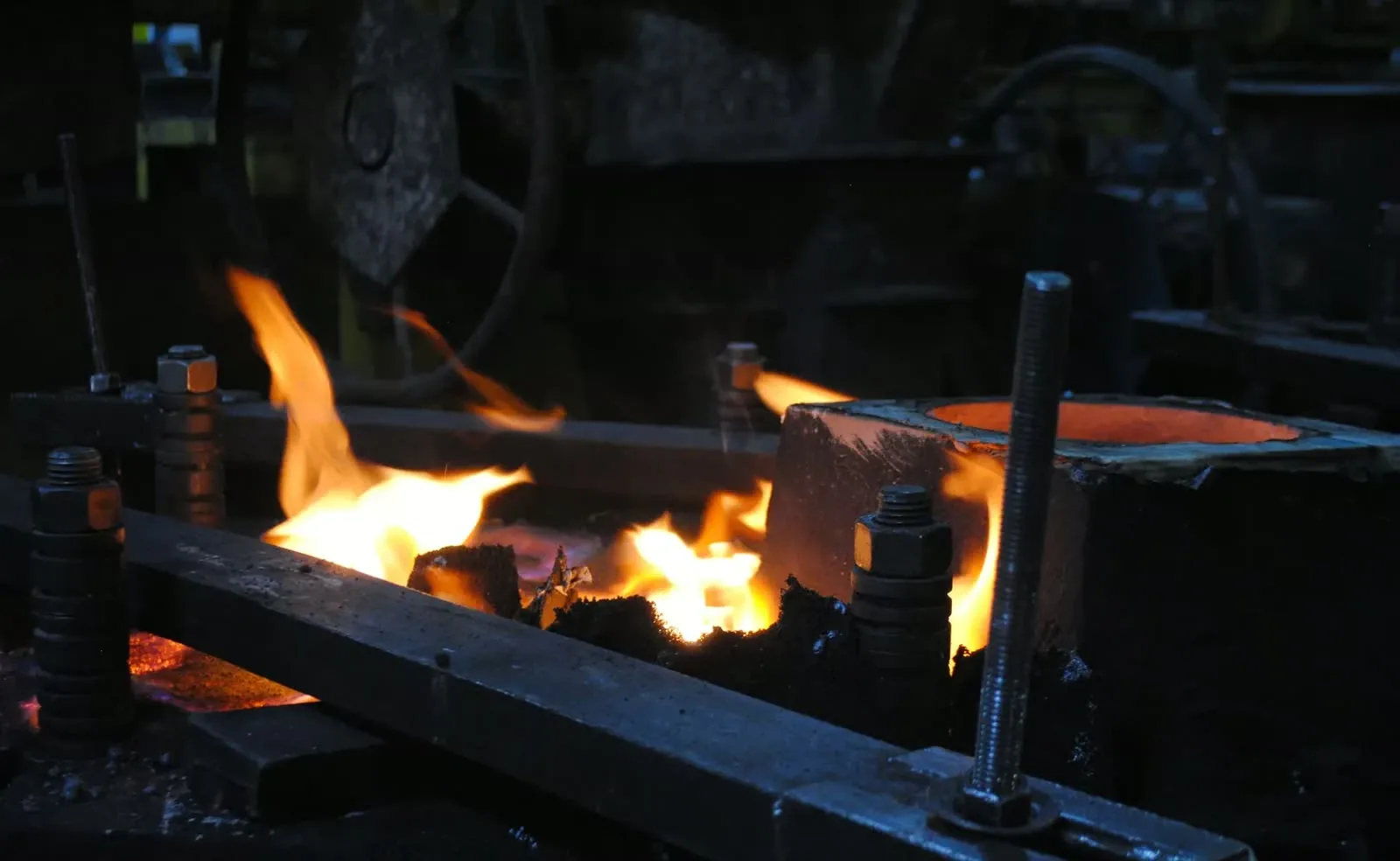
Controlled cooling rates to achieve target microstructure and mechanical properties. Sand separation and reclamation systems minimize waste and ensure sand quality for reuse in subsequent production cycles.
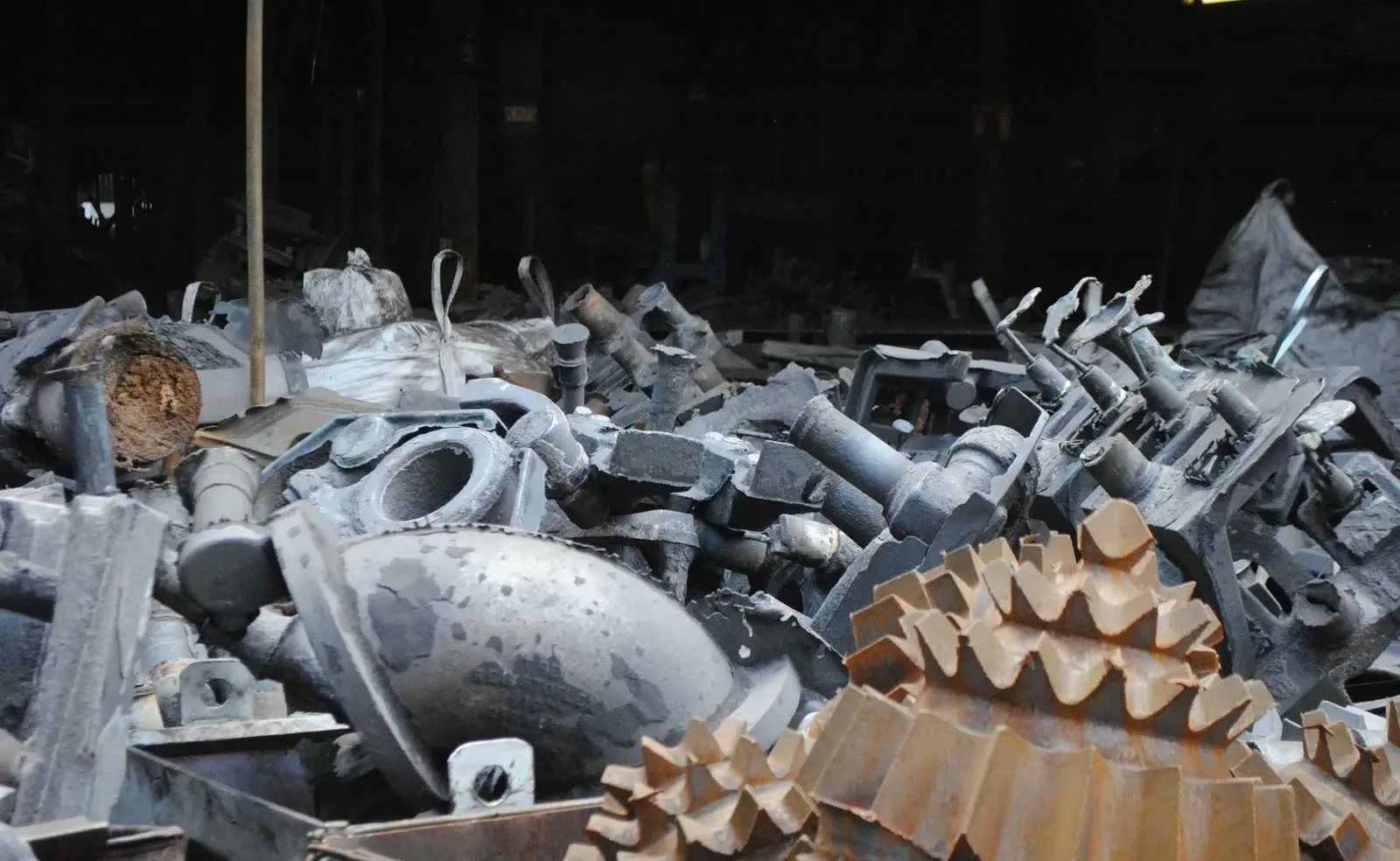
Grinding, shot blasting, and robotic polishing cells remove gates, risers, and surface imperfections. Parts are inspected before advancing to heat treatment or machining.
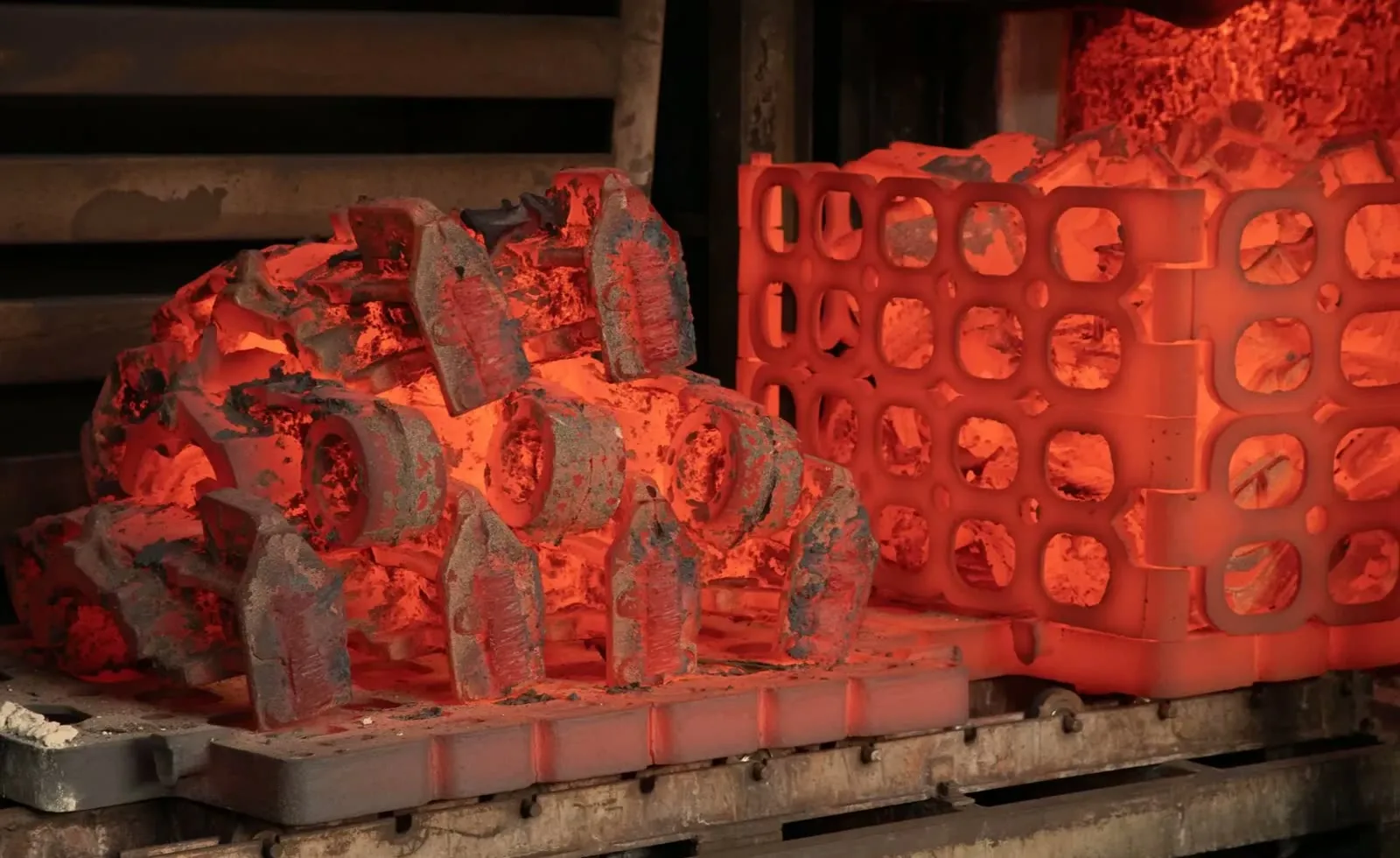
Heat treatment available across our manufacturing partners: normalizing, annealing, quenching, and tempering. Controlled furnaces ensure precise microstructure and target mechanical properties for each alloy and customer specification.
Partner facilities machine on CNC horizontal and vertical centers, lathes, conventional equipment, and cobots, matched to each alloy family. A dedicated assembly step handles final part integration, and valves undergo pressure and leak testing as required.
Full dimensional, metallurgical, and NDT inspection per customer specifications. Destructive testing (Charpy impact, tension/tensile, cross-section cuts). Non-destructive: ultrasonic, liquid penetrant, magnetic particle, radiographic, hardness, chemical analysis, dimensional, visual, leak testing, and pressure testing. 3D scanning for reverse engineering and dimensional verification. Every part is verified before shipment.
Share your specs with our engineering team. Complex geometry, low-to-medium volume production, or custom alloy.